Looking After Property in Pattaya: Maintenance, Repairs & Management
Monday, 31 August 2026
Property Management & Maintenance in Pattaya: Costs, Responsibilities and Who to Call
Owning or renting property in Pattaya should be enjoyable, but every home eventually needs looking after. Air-conditioning units need servicing, taps can leak, appliances stop working, gardens grow, swimming pools need attention and sometimes a problem appears when it is least convenient.
For owners who live overseas, even a relatively minor problem can become difficult to organise from thousands of kilometres away. For landlords, there is the additional responsibility of keeping a tenanted property functioning correctly. Tenants, meanwhile, need to understand which everyday responsibilities belong to them and when an issue should be reported to the landlord or managing agent.
The difficulty is that property management and property maintenance are often spoken about as though they are the same thing. They are connected, but they perform different roles — and understanding that difference can prevent confusion when something goes wrong.
This guide explains how property management and maintenance work in Pattaya, some of the most common issues owners and tenants encounter, who may normally be responsible, why the price of a repair cannot always be known in advance, and how to find appropriate specialist help when a property needs more than routine attention.
Cornerstone Insight
A small maintenance problem is usually easier and less expensive to deal with when it is reported early. A dripping pipe, unusual A/C noise or intermittent electrical fault may seem minor today, but delaying investigation can sometimes allow a straightforward problem to become a much larger repair.
What Is the Difference Between Property Management and Property Maintenance?
Property management is primarily about looking after the interests of the property owner and coordinating what happens with the property. Depending on the arrangement, this may include communicating with tenants, monitoring the property, arranging inspections, dealing with reported problems, coordinating repairs and keeping the owner informed.
Property maintenance is the physical work required to keep the home functioning and in reasonable condition. That can range from routine A/C cleaning and pest treatment to plumbing, electrical repairs, pool servicing, gardening, painting, appliance repairs or replacing damaged equipment.
The property manager therefore does not need to be the electrician, plumber or air-conditioning technician. An important part of good management is recognising when specialist knowledge is required and helping to coordinate the appropriate person to inspect or repair the problem.
This distinction becomes particularly important when discussing charges. A management or coordination fee is not necessarily the cost of the repair itself. Specialist labour, replacement parts, materials and additional work may need to be quoted separately once the actual fault has been identified.
For landlords who want to understand the wider responsibilities involved in looking after a tenanted investment, our Pattaya Property Management Guide 2026 looks more closely at tenant management, rental performance, communication and protecting a property as a long-term investment.
Why Does Regular Property Maintenance Matter in Pattaya?
Pattaya's climate makes regular property care particularly important. Heat, humidity, strong sunlight and seasonal rain can all affect buildings, equipment and furnishings over time.
Air-conditioning systems work hard for much of the year. Outdoor furniture and paintwork are exposed to intense sunlight. Humidity can contribute to mould or moisture problems in properties that remain closed for long periods, while heavy rain can reveal roof, balcony, window or drainage problems that may not be obvious during the dry season.
Houses introduce additional maintenance considerations. Swimming pools require water treatment and equipment checks, gardens need regular care, pumps and water tanks need to remain operational, and gates, external lighting and drainage systems all form part of maintaining a comfortable home.
Regular maintenance is not simply about keeping a property looking attractive. It can help identify deterioration earlier, protect fixtures and equipment and reduce the possibility of a small issue causing damage elsewhere in the property.
Landlord or Tenant: Who Is Responsible for Maintenance?
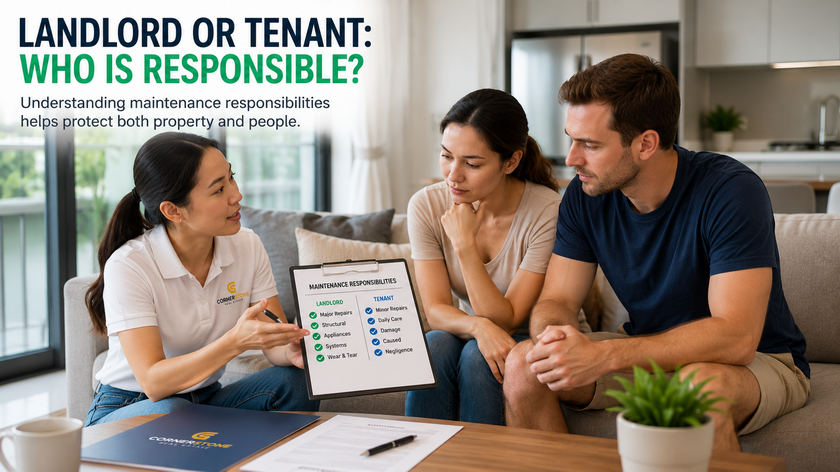
This is one of the most common questions during a tenancy, and unfortunately there is no sensible answer that begins with “the landlord always pays” or “the tenant always pays”. Responsibility depends on the nature of the problem, the circumstances surrounding it and the terms of the rental agreement.
As a general principle, a landlord would normally be expected to deal with genuine property faults and the failure of equipment supplied as part of the rented property where that failure results from normal use, age or reasonable wear and tear.
A tenant, however, is expected to look after the property responsibly during the tenancy. Damage caused through misuse, negligence or the actions of the tenant, occupants or guests should not automatically become the landlord's expense simply because it happened inside a rented property.
There are also everyday running costs and routine responsibilities. These should be clearly established in the rental agreement rather than relying on assumptions after a problem occurs.
When Might the Landlord Normally Be Responsible?
Examples might include an A/C compressor that fails through age, a water pump that stops working through normal use, an electrical fault within the property, a leaking pipe that has not been damaged by the tenant, or a supplied appliance that reaches the end of its reasonable working life.
When Might the Tenant Normally Be Responsible?
Examples could include damage caused by misuse, broken items resulting from an accident or negligence, lost keys or access cards, or repairs required because reasonable care was not taken. Responsibility for routine servicing or minor consumables should follow whatever has been agreed in the tenancy contract.
The Rental Agreement Comes First
Every maintenance situation should be considered alongside the signed rental agreement and the actual cause of the problem. If responsibility is unclear, establish what has failed and why before deciding who should pay. This is much fairer than trying to assign responsibility before the fault has even been diagnosed.
Routine Maintenance and Unexpected Repairs Are Not the Same Thing
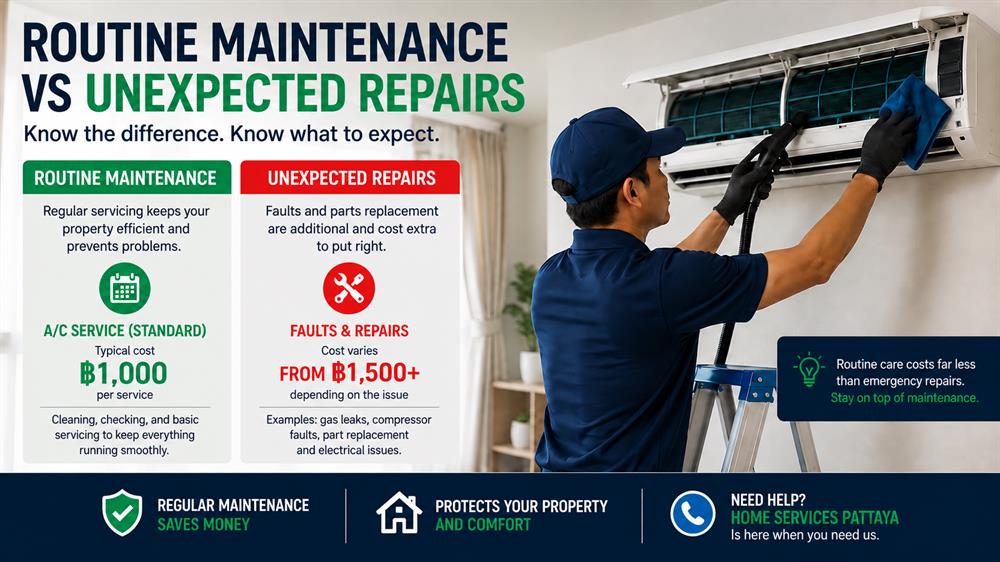
This distinction is particularly important when discussing the cost of property maintenance.
Take air-conditioning as a simple example. A standard A/C service and clean may have a known service charge. A technician can clean the filters and internal components, inspect the system and carry out the normal servicing work expected during the appointment.
But if the reason the A/C is not cooling is actually a refrigerant leak, faulty thermostat, damaged control board, drainage problem, fan motor or failed compressor, the cost will understandably be different. The original servicing charge cannot reasonably include parts and repairs for a fault that had not yet been diagnosed.
Pest control is another good example. A standard preventative treatment is different from dealing with an established termite problem or a significant infestation requiring specialist treatment and repeat visits.
The same principle applies to plumbing, electrical work, swimming pools and appliances: the initial visit or routine service can sometimes be priced in advance, while the cost of repairing an unknown fault usually cannot.
Service Price Does Not Mean Unlimited Repair Price
Where a standard service has a published charge, that price relates to the work described. If inspection identifies a separate fault, replacement part or additional repair, the additional work should be explained and, wherever reasonably possible, quoted before proceeding.
What Does Property Maintenance Cost in Pattaya?
Some property services can be given a straightforward indicative price because the work involved is reasonably predictable. Others cannot be priced accurately until somebody has inspected the problem and established what is actually wrong.
The table below is designed to give Cornerstone clients a practical guide to some common additional property services and coordination charges. It should not be interpreted as a fixed-price repair menu. Where a technician discovers a fault, specialist work, replacement parts or additional labour may be required and the final cost will depend on the work involved.
Indicative Property Maintenance & Additional Services Charges
| Service | Indicative Charge | What You Should Know |
|---|---|---|
| A/C Standard Service & Cleaning | ฿1,000 per unit | Standard servicing and cleaning. Leaks, drainage faults, thermostats, circuit boards, compressors, replacement parts and other repairs are additional. |
| Pest Control | From ฿750 | Standard preventative/internal treatment. Termites, established infestations, larger properties, specialist treatment and repeat programmes require separate quotation. |
| Standard Property Inspection | ฿500 | General visual condition check with photographs. Intended as a basic property visit rather than a technical or structural inspection. |
| Detailed Property Inspection | ฿1,000 | More comprehensive condition check including selected A/C, lighting, taps and appliances, together with visible signs of leaks, moisture or mould. |
| Mailbox / Bill Collection | ฿300 | Collection/check of mail or bills, with electronic copies where required. |
| Appliance Installation Coordination | ฿500 | Coordination charge only. Appliance purchase, delivery, installation materials and specialist installation costs are additional. |
| Minor Purchasing / Property Supplies | ฿500 | For straightforward purchasing of smaller household or property items. The cost of the purchased items is additional. |
| Purchases Over ฿5,000 | Purchase cost + 10% | Purchasing and coordination charge. Receipts or supporting purchase information provided where applicable. |
| General Repair Coordination | Contractor cost + 10% | For coordinating external tradespeople or specialist repairs. Labour, materials and replacement parts are charged according to the work required. |
| Emergency Call-Out | ฿5,000 | Priority assistance for genuine urgent situations. Specialist contractor charges, labour, replacement parts and materials are additional. |
Important: These Are Indicative Charges
Prices shown are indicative service or coordination charges and may vary depending on the size and location of the property, access, the nature of the problem and the work required. Where faults, replacement parts, specialist treatment or additional labour are identified, a separate quotation will be provided wherever reasonably possible before additional work proceeds. Emergency situations may require immediate action to prevent further damage.
Why Can the Final Cost Be Different From the Initial Service Charge?
The most important distinction is between carrying out a known task and diagnosing an unknown problem.
If an owner requests routine A/C cleaning, for example, the service required is understood. If the request is “the A/C has stopped cooling”, the cause may not be known until a technician attends the property. Cleaning may solve the problem, but there could instead be a refrigerant leak, failed electrical component, blocked drainage system or mechanical failure requiring additional work.
Plumbing follows the same principle. Replacing a known tap fitting is very different from investigating water appearing through a ceiling when nobody yet knows whether the source is a pipe, bathroom fitting, neighbouring property, roof or drainage system.
This is why responsible maintenance should avoid promising a repair price before the cause of the problem is understood. Where circumstances allow, the sensible process is to diagnose the fault, explain what is required and obtain approval for significant additional costs before proceeding.
What Counts as a Property Emergency?
An emergency is not simply a maintenance job that somebody would like completed quickly. It is normally a situation where delaying action could create a safety or security risk, leave a property inaccessible or cause significant additional damage.
Examples could include a serious water leak or flooding, a major electrical problem, a failed entrance lock that prevents access or leaves the property unsecured, or another urgent situation where somebody needs to attend and take reasonable immediate steps to protect the property.
The ฿5,000 emergency call-out charge shown above relates to priority attendance and coordination. It does not mean that every repair subsequently required is included within ฿5,000.
For example, if somebody attends because water is entering a property, the immediate priority may be to locate the source, isolate the water supply where possible and reduce further damage. A plumber, building technician or other specialist may then be required to complete the permanent repair.
Emergency Means Protect First, Repair Second
During a genuine emergency, the first objective may be to make the property safe, secure it or prevent further damage. Diagnosing and completing the permanent repair can then follow once the immediate situation is under control.
Looking After a Pattaya Property While You Are Overseas
Property maintenance becomes more complicated when the owner is outside Thailand. Something as simple as meeting a technician, checking whether work has been completed or gaining access to the property can become difficult when the owner is several time zones away.
Vacant properties also benefit from being checked periodically. A home can appear perfectly normal from outside while a leaking fitting, failed appliance, moisture problem or other issue is developing internally.
For condominium owners, building management may be able to help with matters relating to the common areas or building systems, but maintenance inside the privately owned unit generally still needs somebody to take responsibility for identifying and organising.
Owners of houses and pool villas have even more to consider. Gardens, swimming pools, pumps, external lighting, gates, drainage and general exterior condition can all require attention while the property is unoccupied.
What Should a Property Inspection Actually Check?
The level of inspection should match what the owner needs. A straightforward visual visit might confirm that the property is secure, look for obvious water leaks or damage and provide photographs. A more detailed inspection can go further by checking selected lighting, taps, air-conditioning, appliances and visible areas where moisture or mould may develop.
Neither should be confused with a professional structural survey, electrical safety assessment or specialist inspection. If there is evidence of a more serious problem, the appropriate specialist should be asked to investigate it.
Managing Maintenance When a Property Is Rented
A tenanted property introduces another person into the maintenance process. Good communication between tenant, landlord and managing agent can make an enormous difference to how quickly and fairly a problem is resolved.
Tenants should report significant faults promptly and provide enough information to help identify the problem. Photographs or a short video can often help determine whether a technician is required and what type of specialist may be appropriate.
Landlords should recognise that delaying necessary maintenance can make life difficult for a good tenant and, in some cases, allow the condition of the property to deteriorate further. At the same time, tenants should understand that not every maintenance request automatically represents a landlord expense.
The objective should not be to decide who is “winning” a maintenance discussion. It should be to establish what happened, what needs to be done, what the tenancy agreement says and who is reasonably responsible for the resulting cost.
Photographs Make Maintenance Easier
When reporting a problem, clear photographs and a short explanation can save considerable time. For leaks or intermittent faults, a short video can be particularly useful. The better the initial information, the easier it is to decide whether the problem needs a plumber, electrician, A/C technician, appliance specialist or another trade.
What If Your Property Needs Specialist Work?

Not every property problem can or should be handled as general maintenance. Sometimes the right answer is to bring in somebody who specialises in that particular type of work.
Depending on the property and the problem, this might involve air-conditioning, plumbing, electrical work, swimming pools and water systems, pest or termite treatment, gardening and landscaping, renovation, cabinetry, windows and doors, security systems, solar installations or professional property inspections.
Finding somebody who says they can do the work is usually easy. Knowing who is appropriate for the job, whether they are reliable and whether the standard of service will be acceptable can be considerably harder.
How Does Home Services Pattaya Work?
Home Service Pattaya was created to make finding appropriate property services in Pattaya simpler. Rather than presenting homeowners with a long list of contractor names and leaving them to decide who to contact, Home Services connects enquiries with selected local specialists according to the type of work required.
The process is straightforward. You explain what you need at your home, condo or property. The enquiry is passed to an appropriate Home Services specialist, who contacts you directly to discuss the work, provide a quotation and arrange the service.
After the work has been completed, customer feedback helps Home Services continue to monitor the performance of the businesses and tradespeople within its network. This means the process is intended to provide more accountability than simply selecting an unfamiliar contractor from an online directory.
Importantly, the specialist providing the service remains responsible for discussing the work and quotation with the customer. A request for specialist assistance does not mean that every repair has a predetermined price; the scope and cost will depend on the actual job.
The Right Specialist for the Right Problem
Good property maintenance is not about having one person attempt every possible job. It is about recognising the problem, deciding what level of expertise is required and getting the appropriate specialist involved when necessary.
Property Maintenance When Buying or Selling a Home in Pattaya
Maintenance is not only something to think about after you have owned a property for several years. The condition of a home can also become important when buying or selling property in Pattaya.
For Property Buyers
A beautifully presented property can still contain equipment that is approaching the end of its working life. Air-conditioning units, water pumps, swimming pool equipment, appliances, electrical systems and external finishes can all represent future maintenance costs.
This does not mean that an older property should automatically be avoided. Well-maintained homes can remain excellent places to live for many years. What matters is understanding the condition of what you are buying and recognising where future expenditure may reasonably be expected.
Buyers should carry out appropriate due diligence and, where the condition of a building or particular system requires specialist knowledge, consider obtaining an independent professional inspection before completing the purchase.
Our guide to buying property in Pattaya covers some of the wider considerations buyers should understand when preparing for a property purchase.
For Property Sellers
For sellers, dealing with obvious maintenance before putting a property on the market can improve the way a home presents during viewings. A dripping tap, damaged light fitting, dirty A/C unit, neglected garden or small area of unfinished paintwork may individually seem insignificant, but together they can influence a buyer's impression of how well the property has been cared for.
That does not mean every property needs renovation before it can be sold. There is an important difference between sensible preparation and spending heavily on improvements that a future buyer may not value.
The objective should be to identify the maintenance issues that affect presentation, usability or buyer confidence and decide which are worth addressing before marketing begins.
Repair, Improve or Leave Alone?
Before selling, prioritise genuine faults and inexpensive improvements that noticeably improve presentation. Major renovation is a different decision. Before spending heavily, consider whether the likely selling price justifies the investment or whether a buyer may prefer to renovate according to their own taste.
Preventative Maintenance: Small Jobs That Can Prevent Bigger Problems
The most effective property maintenance is often the work carried out before something fails completely. Preventative maintenance does not eliminate every unexpected repair, but it can help equipment operate correctly, highlight deterioration earlier and make the cost of looking after a property more predictable.
In Pattaya, useful preventative checks can include regular A/C cleaning, checking beneath sinks and around bathrooms for signs of water leakage, monitoring pumps and swimming pool equipment, keeping drains and exterior areas clear, treating pest problems before they become established and watching for early signs of moisture or mould.
Owners of houses should also keep an eye on roof areas, gutters and drainage before and during the rainy season, along with garden growth around walls, pipes and external equipment. Gates, locks, exterior lighting and security equipment should be checked periodically rather than waiting until they stop working when they are needed.
For a condominium that remains vacant, periodically running taps, checking air-conditioning, looking inside cupboards and inspecting around windows and balcony doors can help reveal problems that might otherwise remain unnoticed for months.
Don't Wait for Something to Break
Maintenance is generally easier to plan when it is preventative rather than reactive. Regular attention to the parts of a property that work hardest in Pattaya's climate can also make it easier to identify when equipment is deteriorating rather than discovering the problem only after complete failure.
Frequently Asked Questions About Property Management & Maintenance in Pattaya
What is the difference between property management and property maintenance?
Property management involves overseeing and coordinating matters relating to a property, which can include communication, inspections and arranging repairs. Property maintenance is the physical servicing or repair work itself, such as A/C servicing, plumbing, electrical work, pest control, pool maintenance or gardening.
Who pays for repairs in a rented property in Pattaya?
It depends on the cause of the problem and the terms of the rental agreement. Genuine equipment failure through normal use, age or reasonable wear and tear may normally fall to the landlord, while damage caused by misuse or negligence may be the tenant's responsibility. The fault should be understood before responsibility for the cost is decided.
How much does A/C servicing cost in Pattaya?
Our indicative charge for a standard A/C service and clean is ฿1,000 per unit. This covers the standard servicing work described and does not include additional repairs or replacement parts. Refrigerant leaks, thermostats, circuit boards, drainage problems, motors, compressors and other faults require separate assessment and may result in additional charges.
How much does pest control cost in Pattaya?
Our indicative charge for standard preventative/internal pest treatment starts from ฿750. Larger properties, termites, established infestations, specialist treatments and ongoing treatment programmes may cost more and should be assessed according to the work required.
Can someone inspect my Pattaya property while I am overseas?
Yes. A property inspection can be particularly useful for owners who spend long periods outside Thailand. The scope can range from a basic visual check with photographs to a more detailed inspection of selected equipment and visible property condition. Specialist or structural inspections are separate services where required.
What happens if a repair costs more than expected?
Where inspection identifies additional work, specialist labour or replacement parts, the extra cost should be explained and, wherever reasonably possible, quoted before proceeding. Genuine emergencies can be different because immediate action may sometimes be necessary to make a property safe or prevent further damage.
What is considered an emergency property call-out?
An emergency would normally involve an immediate safety, security or serious property-damage risk, such as significant flooding, a major electrical issue or a property that cannot be secured. The ฿5,000 emergency call-out is for priority assistance and coordination; specialist labour, materials, replacement parts and permanent repairs are additional.
How can I find a reliable property contractor in Pattaya?
The right contractor depends on the work required. Home Hub Pattaya provides a way to submit a property-service enquiry and be connected with an appropriate local specialist, rather than trying to choose from a long list of unfamiliar contractors yourself.
Looking After Your Property in Pattaya
Property maintenance is rarely complicated when the right problem reaches the right person at the right time. Difficulties tend to arise when faults are ignored, responsibilities are assumed rather than checked, or somebody attempts to diagnose specialist work without the necessary experience.
For landlords, sensible maintenance helps protect the property while providing tenants with a home that functions as it should. For tenants, reporting genuine problems promptly and taking reasonable care of the property helps create a fairer relationship with the owner. For overseas owners, regular inspections and reliable local coordination can provide reassurance that problems will not simply remain unnoticed.
And when a property requires work outside normal management or routine maintenance, using an appropriate specialist is usually more important than simply finding whoever can attend first.
Whether you own, rent, are preparing to sell or are considering buying property in Pattaya, understanding how maintenance works — and dealing with problems early — can help protect both the property and the people living in it.
Contact Cornerstone Real Estate — Over 21 Years of Pattaya Property Experience
.png)
Whether you are buying, selling, renting or letting property in Pattaya, ongoing care is an important part of protecting a home and making property ownership as straightforward as possible. Our team can help clients understand maintenance responsibilities, coordinate appropriate assistance where required and identify when a specialist should become involved.
Cornerstone Real Estate has been helping property owners, buyers, sellers, landlords and tenants across Pattaya and the Eastern Seaboard since 2005. Our approach remains straightforward: clear information, realistic advice and local knowledge to help you make informed property decisions.
📲 WhatsApp: +66807945904
💬 LINE: @cornerstonepattaya
📞 +66038411250
📧 info@cornerstone.co.th
🌐 www.cornerstone.co.th
🏆 Award-Winning Pattaya Real Estate Agency – Recognised by Nestopa Thailand.
Cornerstone Real Estate – Doing Things The Right Way.
Looking for a property in Pattaya? Register for our free Property Alert and tell us what you are looking for. Our team can contact you when suitable properties become available.