Working Remotely in Pattaya: What Digital Nomads Need to Know
Wednesday, 12 August 2026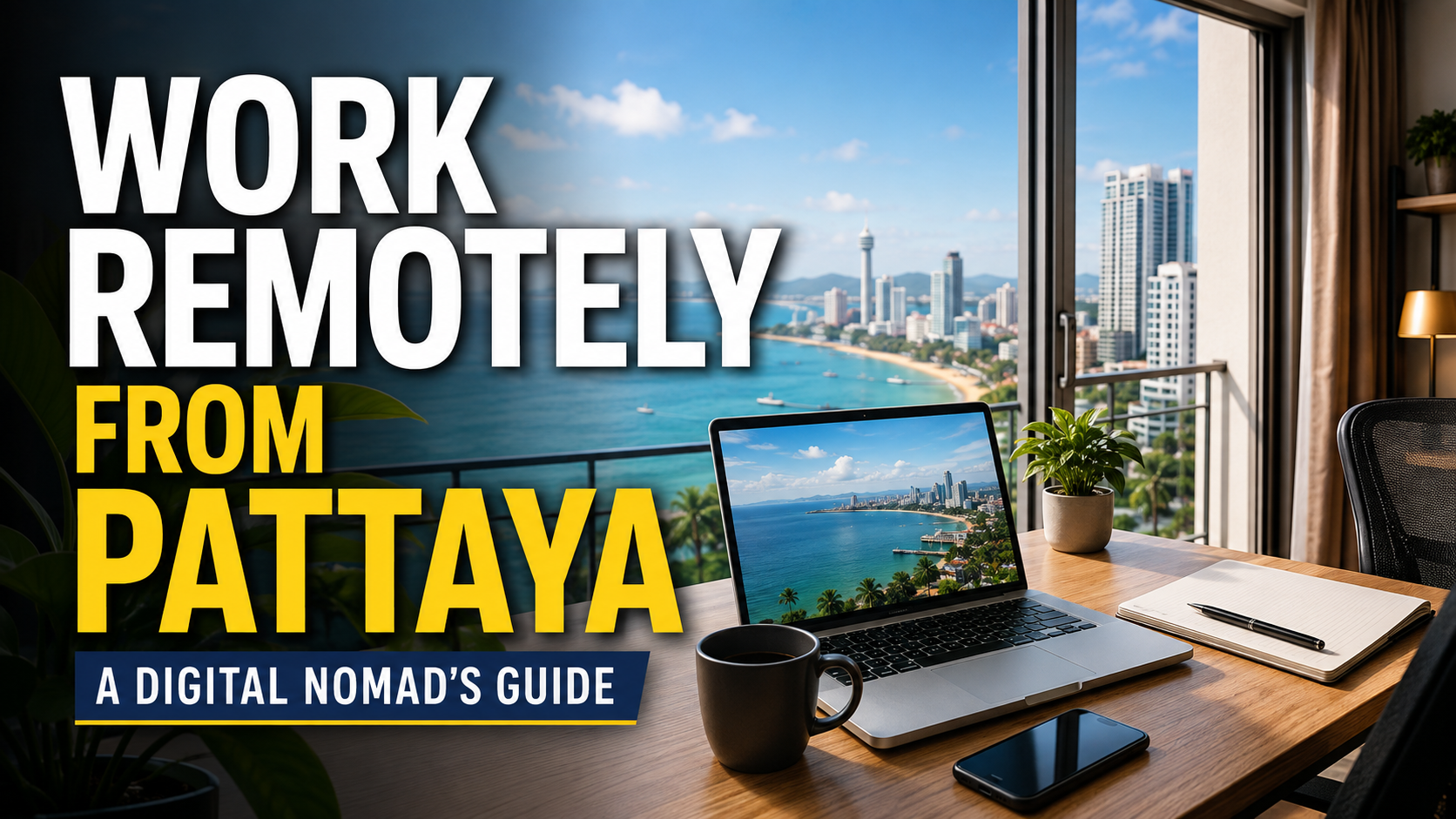
Working Remotely From Pattaya: A Digital Nomad's Guide
Pattaya has changed considerably over the past decade, and so have the people choosing to live here.
Retirees, property investors and holidaymakers remain an important part of the city, but there is another group becoming increasingly visible: people whose work allows them to live almost anywhere.
Remote employees, freelancers, consultants and online business owners are discovering that Pattaya can offer something quite different from Thailand's traditional digital-nomad destinations. Here, a working week can be combined with beaches, restaurants, modern shopping centres and a huge choice of condominiums, while Bangkok and Suvarnabhumi International Airport remain within relatively easy reach.
Thailand's internet infrastructure is another important part of the equation. The country performs strongly for fixed broadband internationally, although the connection available inside an individual condominium remains far more important to a remote worker than any national ranking. A fast connection advertised by a building is not necessarily the same thing as reliable fibre reaching the apartment where you will actually be working.
There is also now a visa route specifically relevant to many remote workers. Thailand's Destination Thailand Visa (DTV) provides qualifying digital nomads, remote workers and freelancers with a longer-term option for spending substantial periods in the country while continuing to work for employers or clients outside Thailand.
But choosing Pattaya as a remote-working base involves more than finding somewhere with Wi-Fi and a swimming pool.
Where should you live? How important is the building itself? What should you check before committing to a long-term rental? And does the lifestyle still work when Pattaya becomes the place where you spend Monday morning answering emails rather than somewhere you visit for a holiday?
This guide looks at what actually matters when considering Pattaya as a base for remote work, from visas and connectivity to choosing the right area and finding a home that works just as well at 10am on a Tuesday as it does at sunset.
Why Pattaya Is Becoming More Interesting for Remote Workers
For many years, Chiang Mai was the obvious answer when people discussed digital-nomad life in Thailand, while Bangkok offered the infrastructure and professional opportunities of a major Asian capital.
Pattaya offers a different proposition.
It combines an established coastal city with a large residential property market, extensive everyday services and relatively straightforward access to Bangkok. That means someone working remotely does not necessarily have to choose between living near the sea and having the practical infrastructure needed for everyday life.
The city's size is also an advantage. Pattaya is large enough to offer hospitals, shopping centres, supermarkets, restaurants, fitness facilities and a wide choice of accommodation, yet compact enough that moving between many of its principal residential areas remains relatively easy.
For somebody whose office is a laptop, that can create an appealing routine. Work from home in the morning, meet somebody for lunch, exercise in the afternoon and reach the beach before sunset without needing to organise an entire day around travelling across a major city.
Connectivity is equally important. Thailand continues to perform strongly in international fixed-broadband measurements, but we would never recommend choosing a Pattaya condominium based on a national internet statistic. What matters is the connection available in the actual unit, together with reliability, upload performance and whether you have a suitable backup when something goes wrong.
Cornerstone Insight
A beautiful sea view may help you choose between two otherwise similar condominiums, but if you work online every day, internet reliability, noise, usable workspace and the comfort of the apartment during working hours deserve to be considered before the view from the balcony.
The Destination Thailand Visa and Remote Working
One of the biggest changes for people considering Thailand as a longer-term remote-working base has been the introduction of the Destination Thailand Visa, usually referred to as the DTV.
The DTV includes a workcation category intended for digital nomads, remote workers and freelancers. The visa has a five-year validity period and allows qualifying holders to stay in Thailand for up to 180 days per entry, with an extension of up to a further 180 days available under the applicable immigration rules.
Applicants under the remote-working category are required to provide supporting documentation, including financial evidence of at least 500,000 Thai Baht and evidence demonstrating their status as a remote worker, freelancer or digital nomad. Exact documentary requirements can vary depending on the embassy or consulate processing the application, so applicants should always confirm the current requirements through official Thai government or consular sources before applying.
The distinction between remote work and employment in Thailand is important. The DTV should not be treated as permission to take employment with a Thai business. Anyone whose circumstances involve employment, operating a business in Thailand or other activities beyond the scope of the visa should obtain appropriate professional immigration and legal advice.
Immigration requirements can also change. Long-stay residents should therefore check current reporting, entry and extension requirements directly with Thai Immigration rather than relying on advice copied from an old forum post or social-media video.
Important
Cornerstone Real Estate is a property agency, not an immigration or legal adviser. Visa rules and individual circumstances can change, so always verify current requirements with the relevant Thai authorities or a qualified professional before making decisions based on your immigration status.
Arriving in Thailand: One Small Detail to Remember
Before arriving in Thailand, non-Thai nationals are required to complete the Thailand Digital Arrival Card (TDAC) online. The digital system replaced the traditional paper arrival card and can be submitted within three days before arrival, including the date of arrival.
It is a relatively small part of moving to Thailand, but exactly the kind of administrative detail that is easier to deal with before travelling rather than discovering at the last minute.
Internet in Pattaya: Check the Apartment, Not Just the Building
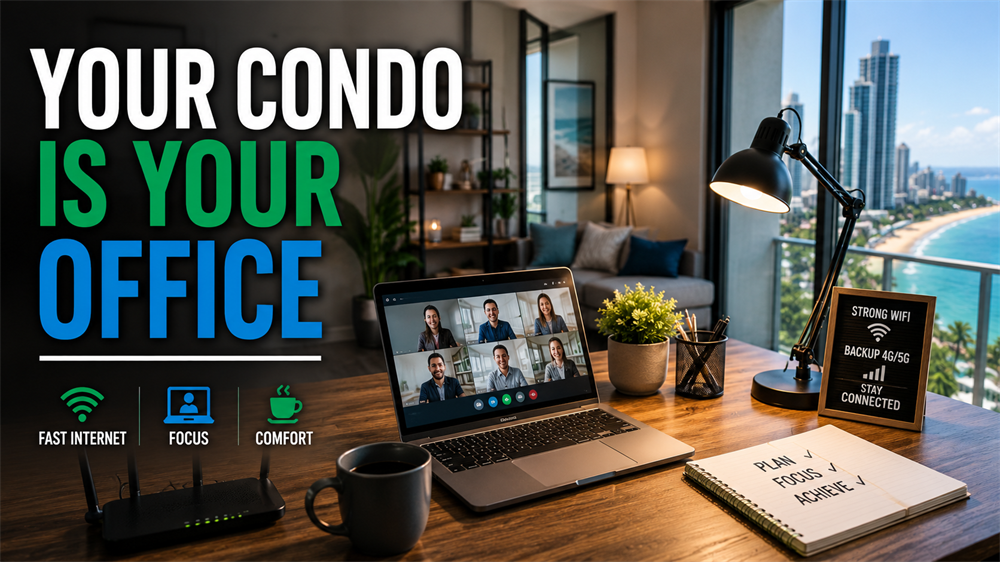
Pattaya is generally well served by modern internet infrastructure, particularly across its established condominium areas. For a remote worker, however, the important question is not whether Pattaya has fast internet. It is whether the particular home you are considering has the connection you need.
Before committing to a long-term rental, ask what connection reaches the unit itself. If reliable internet is essential to your work, do not rely solely on the building's advertised facilities or assume that every apartment in the same condominium has an identical setup.
Ideally, test the connection in the apartment. Look at both download and upload performance, particularly if your work involves video conferencing, cloud backups or transferring large files. It is also worth checking mobile reception inside the unit so that a Thai SIM or eSIM can provide a backup connection if your fixed service is temporarily unavailable.
Then consider the less obvious factors. Is there somewhere comfortable to work for several hours? Is there sufficient natural light without direct afternoon sun making the room uncomfortable? Is the apartment beside a busy road, swimming pool, lift lobby or construction site? Can you close a door and take a video call without hearing everything happening elsewhere in the property?
These questions may sound less exciting than choosing a rooftop pool or panoramic view, but after several months of working from home they can become considerably more important.
Where Should a Remote Worker Live in Pattaya?
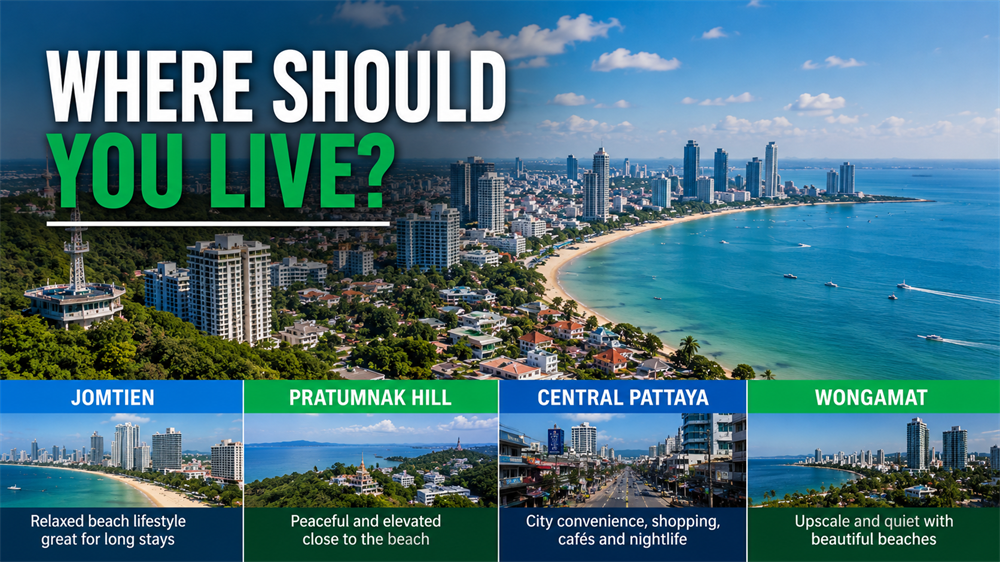
There is no single part of Pattaya that is automatically best for remote workers. The right location depends much more on how you want your working day and life outside work to fit together.
Someone who wants to close the laptop and walk along the beach may make a very different choice from somebody who values shopping centres, restaurants and everyday services within minutes of home. Your working hours matter too. If you regularly work late into the evening to match European or North American time zones, the convenience and character of the neighbourhood around you can become particularly important.
Jomtien Beach
Jomtien Beach can be particularly appealing if you want the coast to form part of everyday life. The long beachfront, large condominium market, restaurants, cafés and established residential community make it practical for longer stays without feeling disconnected from Pattaya.
For a remote worker, one of Jomtien's biggest advantages is the routine it can offer: work from home during the day, then have the beachfront available for walking, exercise or dinner once work finishes.
Pratumnak Hill & Cosy Beach
Pratumnak Hill & Cosy Beach offer a more residential position between Central Pattaya and Jomtien. The area combines quieter streets, beaches, cafés and restaurants while keeping both sides of the city relatively accessible.
It can suit remote workers who want to remain close to the city without living directly in its busiest areas. We explore the neighbourhood in considerably more detail in our guide to living in Pratumnak Hill & Cosy Beach.
Central Pattaya
For sheer convenience, Central Pattaya has obvious advantages. Shopping centres, supermarkets, restaurants, hospitals, gyms and everyday services are concentrated within a relatively compact part of the city.
The trade-off is that it is busier. If you expect to work from home regularly, the position of the individual condominium becomes especially important. A quieter upper-floor apartment can provide a very different working environment from a unit overlooking one of the city's busiest roads.
Wongamat Beach
At the northern end of Pattaya, Wongamat Beach can appeal to remote professionals looking for a quieter and generally more upmarket coastal environment.
The area includes some of Pattaya's best-known beachfront condominiums and can work particularly well for longer-term residents who value privacy, building quality and immediate access to the sea. It offers less of the concentrated city-centre convenience of Central Pattaya, but for some remote workers that quieter atmosphere is precisely the attraction.
Cornerstone Insight
Choose the neighbourhood around the life you expect to live, not simply where somebody online says digital nomads should stay. Beach access, working hours, noise, restaurants, transport and everyday convenience can all matter more over 12 months than being close to a fashionable coworking space.
What Does It Cost to Live and Work Remotely in Pattaya?
One of Pattaya's attractions for remote workers is the ability to build a lifestyle around very different budgets.
There is no particularly useful answer to the question, "How much does it cost to live in Pattaya?" because two people living in the same condominium building can have completely different monthly expenses.
Accommodation will usually be the largest fixed expense. Rental prices vary considerably according to area, building, property size, condition, floor, view and facilities. A compact one-bedroom condominium away from the beachfront may cost substantially less than a modern sea-view apartment, even when the two properties are only a short distance apart.
Rather than publishing a rental-price table that can quickly become outdated, we recommend looking at current long-term listings in the areas you are actually considering. This gives a much more realistic picture of what your budget can secure today.
Food is equally flexible. Pattaya has everything from inexpensive local restaurants and markets to international dining and high-end restaurants. Someone cooking regularly and eating locally will naturally spend very differently from somebody eating out for most meals.
Remote workers should also budget for something a holiday visitor may barely notice: the cost of being at home for much of the working day. Air conditioning, electricity and internet become genuine monthly working expenses when your condominium is also your office.
Transport depends heavily on where you choose to live and how you organise your routine. Someone in Central Pattaya or a well-positioned part of Jomtien may complete many everyday journeys locally, while somebody who regularly travels between different parts of the city may spend considerably more on transport.
Budget for Your Lifestyle, Not Somebody Else's
Online cost-of-living figures can be useful as a starting point, but they should never be treated as a personal budget. Decide what standard of condominium you want, where you want to live and how you expect to spend your time, then calculate your likely costs around that lifestyle.
Your First Few Weeks Living and Working in Pattaya
The first few weeks in Pattaya are usually when the difference between visiting the city and actually living here becomes apparent.
Once the airport transfer and check-in are behind you, concentrate on establishing the practical parts of everyday life rather than trying to solve everything immediately.
A Thai SIM or eSIM is useful from the beginning, particularly if you intend to use mobile data as your backup internet connection. Learn where your nearest supermarket, pharmacy, laundry, café and exercise facilities are. Work out how long journeys actually take during the times you are likely to make them rather than relying entirely on distances shown on a map.
If you are already committed to a long-term condominium, test your working setup properly during those first days. Make a video call. Upload a large file. Work through an ordinary day from the desk or area you intend to use. Check whether afternoon heat, outside noise or the position of the air conditioning affects your comfort.
This is also the time to understand how your condominium operates. Find out how deliveries are handled, where rubbish is disposed of, how maintenance issues are reported, how utility bills are paid and what rules apply to residents and guests.
Administrative matters should be handled according to your individual circumstances. Keep track of your visa conditions and any applicable immigration reporting requirements, and use official sources or qualified advisers when something is unclear rather than relying on advice intended for somebody with a different visa or situation.
Common Mistakes Remote Workers Make When Choosing a Pattaya Condo
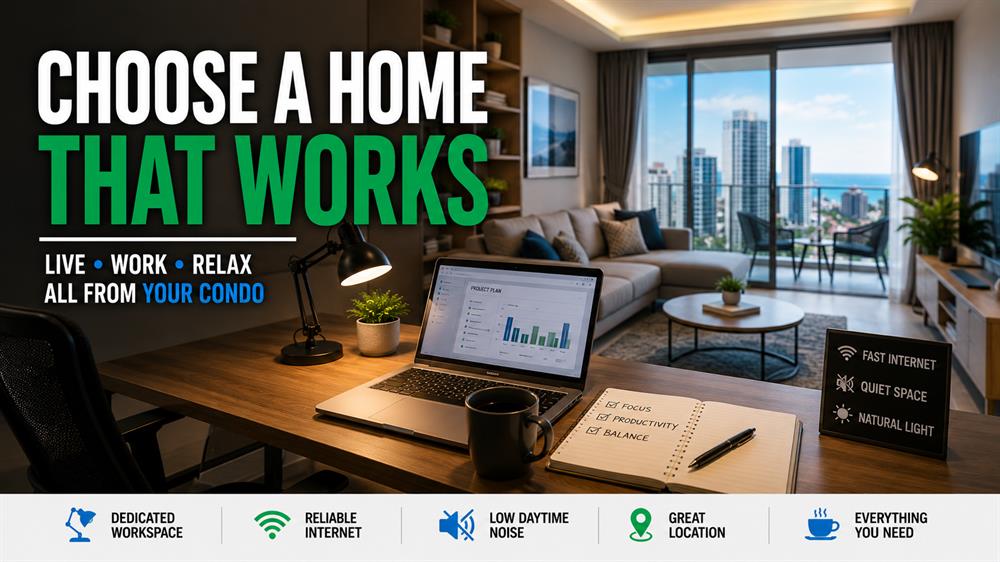
Many of the mistakes remote workers make when choosing a property are not really property mistakes at all. They happen because somebody chooses a home for the lifestyle they imagine having rather than the routine they will actually follow.
Choosing the View Before the Workspace
A balcony overlooking the sea is understandably attractive, but it will not compensate for working eight hours a day from an uncomfortable dining chair. If you work from home regularly, mentally place your desk before deciding where you will place your sun lounger.
Assuming the Internet Will Be Fine
A condominium having internet available does not tell you enough. Confirm what is available in the actual unit and, where possible, test it. If being offline could prevent you from working, have a mobile-data backup as well.
Ignoring Daytime Noise
People often view properties in the evening or at weekends, but a remote worker may experience the building mainly during weekday working hours. Pool activity, renovation work, nearby construction and road noise can all feel very different when you are trying to speak during a meeting.
Choosing an Area for the Wrong Reason
Living beside a particular café or coworking space may sound convenient, but businesses can change. Choose a neighbourhood because the wider area suits your lifestyle rather than because one business happens to be popular today.
Forgetting That Home Is Also the Office
Working from home means using electricity and air conditioning for much more of the day. It also means spending considerably more time inside the property than the average holidaymaker. A slightly larger or better-positioned condominium can therefore be worth paying more for when it improves both your working day and your life outside work.
Could Buying Property in Pattaya Make Sense for a Remote Worker?
For somebody spending only a few months in Thailand, renting will usually provide the flexibility they need. But the calculation can change for people who return to Pattaya repeatedly or decide to make the city a much more permanent base.
Owning a condominium means being able to create a working environment around your own needs rather than adapting to somebody else's furniture and setup. It can also make sense for people who want a long-term home in Thailand and have taken the time to understand both the property market and the legal framework surrounding ownership.
It should not, however, be treated simply as the next step after renting. Buying involves different financial, legal and practical considerations, and the fact that you enjoy living in Pattaya does not automatically mean that every condominium represents a sensible purchase.
If your plans are becoming more permanent, our guide to buying property in Pattaya explains some of the important issues to understand before moving from tenant to property owner.
For buyers who also want their property to have potential as a future rental asset, our Pattaya rental investment properties provide another useful starting point for exploring homes selected with rental potential in mind.
Rent First or Buy?
If Pattaya is completely new to you, there is considerable value in understanding the city before buying. Different neighbourhoods can produce very different day-to-day experiences, and living here gives you a much clearer idea of which location, building and property style genuinely suit you.
Is Pattaya the Right Base for Your Remote Work?
Pattaya will not be the right remote-working destination for everybody, and that is an important part of deciding whether the city suits you.
If your ideal working environment is a small island, an extremely quiet community or somewhere built almost entirely around a digital-nomad scene, there are other destinations in Thailand that may fit that lifestyle better.
Pattaya's strength is different. It is a functioning coastal city where remote work can fit into an already established lifestyle rather than being the reason the destination exists.
You have a large choice of places to live, modern shopping centres, hospitals, restaurants, gyms and everyday services, alongside beaches and a lifestyle that can feel considerably more relaxed once the working day is finished. Bangkok and its international airport are also accessible without having to live in the capital itself.
The city can also work particularly well for people whose stay gradually becomes something more permanent. You might arrive planning to spend a year working remotely, then discover that Pattaya works well enough for your lifestyle that you begin considering a longer tenancy or eventually purchasing a home.
That flexibility is one of Pattaya's strongest advantages. It can function as somewhere to spend a period working overseas, but it also has the infrastructure and residential property market needed by people who ultimately decide to make Thailand a much more permanent part of their lives.
The Question to Ask Yourself
Do not ask only whether Pattaya is a good place for digital nomads. Ask whether Pattaya supports the way you personally want to work and live. Your working hours, preferred neighbourhood, budget, need for quiet space and what you want to do when work finishes are much better guides.
Frequently Asked Questions
Is Pattaya a good place for digital nomads and remote workers?
For many remote workers, yes. Pattaya combines modern infrastructure, widespread internet availability, a large choice of accommodation, beaches, restaurants and everyday services. The important part is choosing the right area and a property that genuinely works as both a home and a workplace.
Can digital nomads legally stay in Thailand long term?
Thailand's Destination Thailand Visa includes a workcation category for qualifying digital nomads, remote workers and freelancers. Eligibility and documentary requirements apply, and immigration rules can change, so applicants should confirm their individual position through official Thai government sources or an appropriately qualified professional.
Which part of Pattaya is best for remote workers?
There is no single best area. Jomtien can suit people wanting an everyday beachfront lifestyle, Pratumnak offers a more residential position between Pattaya and Jomtien, Central Pattaya prioritises convenience, while Wongamat can appeal to those looking for a quieter and more upmarket coastal environment.
Is the internet reliable enough to work remotely from Pattaya?
Many Pattaya condominiums have access to fast fixed internet services, but remote workers should check the connection available in the individual property rather than relying on general claims about the building or city. A mobile-data backup is also sensible when uninterrupted internet access is essential to your work.
Should I rent or buy a condo if I work remotely from Pattaya?
For somebody new to Pattaya, renting first can provide valuable experience of the city and its different neighbourhoods. Buying may become worth considering if Pattaya develops into a longer-term or permanent base, but the decision should be based on your wider financial and lifestyle plans rather than simply comparing monthly rent with a purchase price.
Does Cornerstone offer short-term holiday rentals?
Cornerstone Real Estate specialises in long-term Pattaya rentals, normally based on a 12-month tenancy. Our rental properties are therefore most relevant to remote workers and other residents planning to establish a longer-term base in Pattaya rather than those looking for short holiday accommodation.
Finding a Pattaya Home That Works When You Do
The best home for a remote worker is not necessarily the condominium with the most impressive facilities or the most dramatic photographs.
It is the property that still works when the holiday feeling wears off and an ordinary working week begins.
That means reliable internet, enough space to work comfortably, a location that suits your everyday routine and a building where you are happy spending significant time. The beach, swimming pool, balcony and view still matter, but they form part of a much bigger picture when the property is both your home and your workplace.
If you are looking for somewhere to establish a longer-term base, you can browse our current condos for rent in Pattaya or explore houses for rent in Pattaya if you need more space or a separate home office.
If nothing currently available matches what you need, our free Property Alert allows you to tell us what you are looking for so our team can contact you when a suitable property becomes available.
Cornerstone Insight
Tell us how you actually work when discussing a rental. If you need a separate office, make daily video calls, work overnight because of another time zone or require particularly reliable internet, those details can completely change which properties we recommend.
Contact Cornerstone Real Estate
.png)
Whether you are moving to Pattaya to work remotely, relocating for the longer term or simply trying to decide which part of the city will suit you best, our team can help you compare locations and properties based on the way you actually intend to live.
Cornerstone Real Estate works with long-term tenants, buyers, sellers and property owners throughout Pattaya and the surrounding Eastern Seaboard. Our approach is straightforward: clear information, realistic advice and local knowledge to help you make a decision that works for you.
📲 WhatsApp: +66807945904
💬 LINE: @cornerstonepattaya
📞 +66038411250
📧 info@cornerstone.co.th
🌐 www.cornerstone.co.th
🏆 Award-Winning Pattaya Real Estate Agency – Recognised by Nestopa Thailand.
Cornerstone Real Estate – Doing Things The Right Way.
Still looking for the right property? Register for our free Property Alert and tell us what you need. We can let you know when a suitable Pattaya property becomes available.