


Is Airbnb Legal in Pattaya? Condo Rental Rules for 2026
Wednesday, 11 November 2026
Is Airbnb Legal in Pattaya? Short-Term Rental Rules Every Condo Owner Must Know in 2026
Is Airbnb Legal in Pattaya? The Short Answer
Is Airbnb legal in Pattaya? For most condo owners, no, not for stays under a month. Renting a unit by the night or week without a hotel licence breaches the Hotel Act B.E. 2547 (2004). Stays of one month or longer are generally treated as ordinary leases. Many buildings also ban short stays in their own rules, and those rules can be enforced against you.
Enforcement is uneven and usually starts with a complaint, which is why so many listings still exist. But the risk is real, and it sits with the owner, not the platform or the guest. We work with owners and tenants across Pattaya every week, and our rental investment collection is built around leases that stand on solid legal ground.
This guide is written for condo owners and investors who are weighing up a purchase or already own a unit. If you only want to book a stay as a guest, the same rules explain why some hosts ask you to meet them outside the building.
Not legal advice. This guide explains the rules as we understand them in October 2026. It is not legal advice, and the law is moving. Please confirm your position with a licensed Thai lawyer before you list a unit or buy one for rental income.
The Law in Plain English: The Hotel Act and the 30-Day Rule
The Hotel Act defines a hotel as a business that offers temporary lodging for payment. It carves out accommodation let on a monthly basis or longer. People shorten this to the “30-day rule”, but the statute itself says monthly, so a lawyer will read it as a test of how the unit is let, not just a day count. A Thai legal reference summary of the Hotel Act makes the same point.
In practice, this gives two clear outcomes:
- Under a month: treated as hotel use, so a hotel licence is needed.
- One month or longer: treated as a normal lease, generally outside the Act.
- Listing on a platform: changes nothing about the analysis. The law looks at what you do, not where you advertise.
The Condo Rules: Juristic Person, Building Bylaws and the Condominium Act
Condos add a second layer. In November 2023, the Land Department told its offices that condominium units cannot be used for hotel operations. The only route it described is cancelling the building's condominium registration first, which is rarely realistic. Tilleke & Gibbins summarised the circular when it was issued.
The Condominium Act also restricts commercial use of residential buildings. Legal summaries put the fine at up to THB 50,000, plus THB 5,000 a day. On top of that, each building has a juristic person (the legal entity that runs the common areas) and its own bylaws. Many have added clear bans on daily rentals, and they can fine owners, cut key-card access, or bring a civil claim.
Before you buy, read the bylaws in full. If the English translation is vague, ask for the Thai original and have it checked.
What the Penalties Can Be
Several rules can apply at once. Penalties quoted by multiple legal sources are below.
| Rule | Penalty |
|---|---|
| Hotel Act | Up to 1 year in prison, a fine of up to THB 20,000, plus up to THB 10,000 for each day the breach continues |
| Condominium Act | A fine of up to THB 50,000, plus up to THB 5,000 per day |
| Building bylaws | Fines set by the juristic person, loss of key-card access, civil damages |
| Immigration (TM30) | A fine per unreported foreign guest, up to THB 2,000 in one older source |
Why So Many Listings Still Exist: Enforcement in Pattaya
Listings survive because enforcement is patchy, not because the law is soft. Action tends to follow complaints from neighbours or the juristic office. In March 2025, a Ministry of Interior task force inspected three condominiums in Banglamung District, and two were confirmed to be renting units by the day. Pattaya Mail reported the raid, including the use of key lockers so guests could check in without staff.
In busy buildings around Pratumnak Hill, how much risk you face depends heavily on management. Quiet buildings with a firm juristic office tend to act fast, while large towers with lax management may go long periods without a visit. That is luck, not a legal position, and it can end the day one neighbour complains.
Law reform may change this picture, as we explain in the next section. For now, the Hotel Act still applies.
What the 2026 Law Reform Could Change
The Hotel Act is under review. According to a legal update by Formichella & Sritawat, the House of Representatives accepted proposed amendments in principle in July 2026 and sent them to a special committee. On 29 September 2026, the Government then set out a draft Accommodation Establishment Act.
The draft sorts operators by size. The lightest tier covers up to 8 rooms and 30 guests and would need notification only, while larger operators would register or hold a licence. Booking platforms may also be pulled into the system. Even so, the draft is not yet law, no start date has been set, and it is unclear how condo units would be treated. Anyone who tells you Airbnb in Pattaya has already been legalised is ahead of the facts. We will update this guide once the final text is published.
The Small-Accommodation Exemption: Who Can Qualify
Sources disagree on the numbers, so we checked the regulation itself. Ministerial Regulation (No. 2) B.E. 2566 took effect on 29 October 2023. It raised the small-accommodation threshold from 4 rooms and 20 guests to up to 8 rooms and 30 guests. Operators in that range are not treated as hotels once they notify the authorities and pass an inspection. Legal 500 explains the change. Older articles that still quote the 4-room figure are out of date.
Whether this helps a condo owner is a separate question. Given the Land Department position above, we have found no confirmed route for a single condo unit. The exemption looks more realistic for a small guesthouse or villa group on land you own. Treat any claim that a condo qualifies as unproven until a Thai lawyer confirms it in writing for your building.
TM30 and Reporting Foreign Guests
Separate from the Hotel Act, Section 38 of the Immigration Act requires house owners and landlords to notify immigration of a foreign guest within 24 hours of arrival. This is the TM30 notification, and the Thai Immigration Bureau runs the process. One older summary puts the fine at up to THB 2,000 per guest, so check current rules with immigration.
TM30 applies to long-term foreign tenants too, so a 12-month lease does not remove the duty. We recommend that every landlord file it for each new foreign tenant and keep the receipt together with a copy of the tenant's passport.
Tax on Rental Income
Rental income from Thai property is taxable, including for foreign owners. For individuals, the usual method allows a 30% standard deduction, or actual expenses if you can document them. The balance is taxed at progressive rates from 0% up to 35%. If you are not a Thai tax resident, a 15% withholding tax may apply, and you will need a Thai tax ID to file. Our rental tax guide for landlords covers the filing steps, and the Revenue Department publishes the official rules.
Income from short stays can be classified differently and may bring other obligations. Ask an accountant before you assume the same rules apply.
Risks for Condo Owners
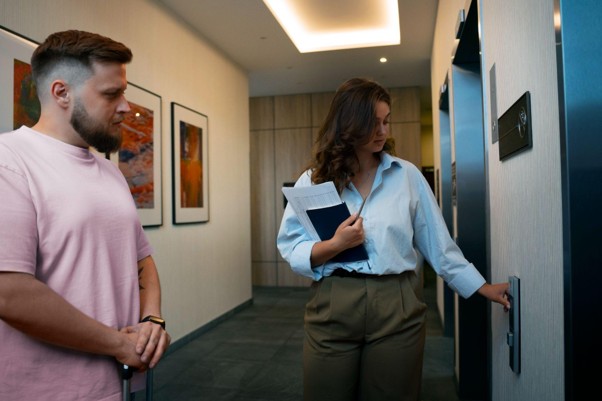
Here is how we rank the risks when owners ask us. Buildings in busy Jomtien towers tend to sit at the stricter end because juristic offices watch the lobbies closely.
| Risk | Likelihood | Consequence |
|---|---|---|
| Hotel Act complaint | Low to medium, complaint-driven | Prosecution, fines and daily penalties |
| Juristic person action | Medium to high in strict buildings | Fines, key-card cut-off, civil claim |
| Guest removed mid-stay | Medium | Refunds, lost bookings, poor reviews |
| Platform delisting | Medium, rising with new rules | Lost listing and income history |
| Insurance refusal | High if use is undisclosed | A claim may be declined, so check the policy wording |
| Unpaid tax | Certain once income is earned | Back tax, penalties and surcharges |
Insurance deserves a closer look. Many home and contents policies assume the unit is lived in or let on a normal lease. If you run nightly stays without telling your insurer, a claim after a fire, a flood or a guest injury may be declined. Read the policy wording, and ask the broker in writing whether short stays are covered.
Legal Ways to Earn Rental Income from a Pattaya Condo
You do have options. Each one trades some nightly income for far more certainty.
- Rent for 30 days or more. Monthly stays sit outside the Hotel Act, subject to your building rules and lease terms.
- Sign a 12-month lease. This is what we specialise in. Our guide to renting out your Pattaya property long term explains the process, and you file TM30 for each foreign tenant.
- Buy in a hotel-licensed building. Some buildings operate under a proper hotel licence, so unit rentals are part of the licensed business.
- Use the registered small guesthouse route. This suits houses or villas on land you own, up to 8 rooms and 30 guests, after notification and inspection.
| Option | Typical stay | Legal footing | Best for |
|---|---|---|---|
| 12-month lease | 12 months | Ordinary lease, outside the Hotel Act | Steady, low-effort income |
| 30+ day rental | 1 to 11 months | Generally outside the Hotel Act, but check the bylaws | Owners who want flexibility |
| Hotel-licensed building | Nightly | Covered by the building's own hotel licence | Investors buying into licensed schemes |
| Small guesthouse route | Nightly | Notification and inspection, up to 8 rooms and 30 guests | Houses or villas on your own land |
We will be straight about the trade-off. A long-term lease usually earns less on paper than a full nightly calendar suggests. In our experience, though, nightly income rarely holds at full occupancy once you count cleaning, platform fees, vacant weeks, and management time. Our guide to the real costs of owning Pattaya property shows the other side of the numbers.
Checklist: Before You Buy a Condo for Rental Income
Work through these steps in order before you pay a deposit:
- Ask the juristic office for the bylaws and read the rules on rental periods.
- Check whether the building holds a hotel licence, and ask for proof.
- Ask the seller how current owners rent their units, and what fines have been issued.
- Confirm your insurance covers rental use.
- Speak to a Thai lawyer and an accountant about your own case.
Also run the numbers on a 12-month lease first. If the deal only works with nightly rentals, treat that as a warning sign.
Build Rental Income You Can Defend
A condo that earns steady rent on a proper lease is easier to own, easier to insure, and easier to sell. If you want to rent out a unit, buy one for income, or compare buildings, talk to our team and we will walk you through the options. You can also ask us to set up a Property Alert so new long-term rental listings reach you first.
Frequently Asked Questions about Airbnb in Pattaya
Is Airbnb legal in Thailand?
The platform itself is not banned. The legal problem is the rental period. Stays under a month in most condos breach the Hotel Act, while stays of a month or longer are generally treated as ordinary leases.
Is Airbnb illegal in Thailand for foreign owners?
The same rules apply to Thai and foreign owners. Foreign owners also have TM30 duties for foreign guests and may face Thai income tax on rental income.
Can I rent my Pattaya condo for 30 days or more?
Generally yes, as long as your building rules and lease allow it. Many owners choose 12-month leases for steady income and fewer vacant weeks.
Can guests get fined for staying in an illegal Airbnb?
Guests rarely face legal action. The exposure falls mainly on the owner. Guests can still be asked to leave mid-stay if the building intervenes.
Does the small-accommodation exemption apply to condos?
The exemption covers up to 8 rooms and 30 guests after notification and inspection. We have found no confirmed route for a single condo unit, so please ask a Thai lawyer before relying on it.
Could the law change soon?
It might. A draft Accommodation Establishment Act was set out on 29 September 2026, but it is not yet law. Until it is passed and published, the Hotel Act still applies.