


Buying Property in Pattaya: A Step-by-Step Guide for Foreign Buyers
Wednesday, 4 March 2026
How to Buy Property in Pattaya: Step-by-Step Guide for Foreigners
Dreaming of a condo with a sea view in Jomtien, a city-centre investment apartment, or a private pool villa in East Pattaya? You are not alone. Pattaya remains one of Thailand's most popular destinations for foreign buyers, offering a rare combination of coastal lifestyle, established infrastructure, international community, and long-term property potential.
For many overseas buyers, the process can feel unfamiliar at first. Thailand has clear rules regarding foreign ownership, condominium quotas, fund transfers, legal due diligence, taxes, and Land Office procedures. Understanding these steps before you begin can help protect your investment and make the buying process far more straightforward.
At Cornerstone Real Estate, we have guided thousands of clients through successful property purchases since 2005. Our local team understands the Pattaya market, the legal process, and the practical details that matter when buying property in Thailand as a foreigner.
This step-by-step guide explains how to buy property in Pattaya safely and legally, from understanding ownership options and reserving a property to completing due diligence, transferring funds, and finalising ownership at the Land Office.
Understanding ownership rules before learning how to buy a property in Pattaya
Before you begin viewing properties, it is important to understand the ownership structures available to foreign buyers in Thailand. While Thai law places certain restrictions on land ownership, there are several well-established and legally secure options that allow overseas buyers to invest and enjoy property ownership with confidence.
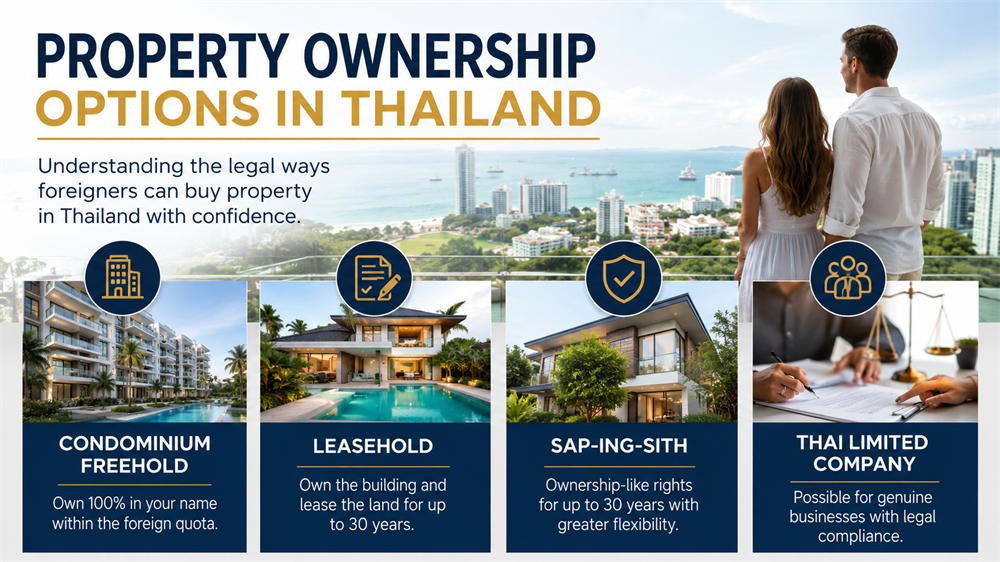
Condominium Freehold
For most international buyers, condominium freehold ownership remains the simplest and most popular option.
Under Thai law, foreigners can own a condominium unit outright in their own name, provided that foreign ownership within the development does not exceed 49% of the building's total saleable area. This is commonly known as the foreign quota.
When foreign quota space is available, buyers receive a freehold Chanote title deed registered in their own name, providing long-term security and straightforward ownership rights.
Leasehold for Villas and Houses
Foreigners cannot generally own land directly in Thailand, but they can legally own the physical structure built upon it while leasing the land itself.
The standard registered lease term is 30 years and can be recorded at the Land Office for additional security. While some agreements reference renewal options beyond the initial term, buyers should understand that only the first 30-year period is guaranteed under current Thai law, with future extensions remaining contractual arrangements between the parties involved.
For many long-term residents and lifestyle buyers, leasehold structures continue to provide a practical and secure solution for owning private homes and pool villas in Pattaya.
Sap-Ing-Sith
Sap-Ing-Sith is a relatively new legal framework that offers ownership-like rights over property for periods of up to 30 years.
Compared with traditional leasehold arrangements, Sap-Ing-Sith provides greater flexibility, including the ability to transfer, inherit, or mortgage those rights more easily. Although still less common than conventional ownership structures, it represents an additional option that some buyers may wish to explore with professional legal guidance.
Thai Limited Company
Legitimate Thai companies may own land when operating genuine businesses within Thailand. However, using nominee shareholder arrangements purely to circumvent foreign ownership laws is illegal and has come under increasing regulatory scrutiny in recent years.
Anyone considering a company-based ownership structure should always seek independent legal advice to ensure full compliance with current Thai regulations and to determine whether such an arrangement is appropriate for their individual circumstances.
The step-by-step process on how to buy a property in Pattaya
Step 1: Reservation and Deposit
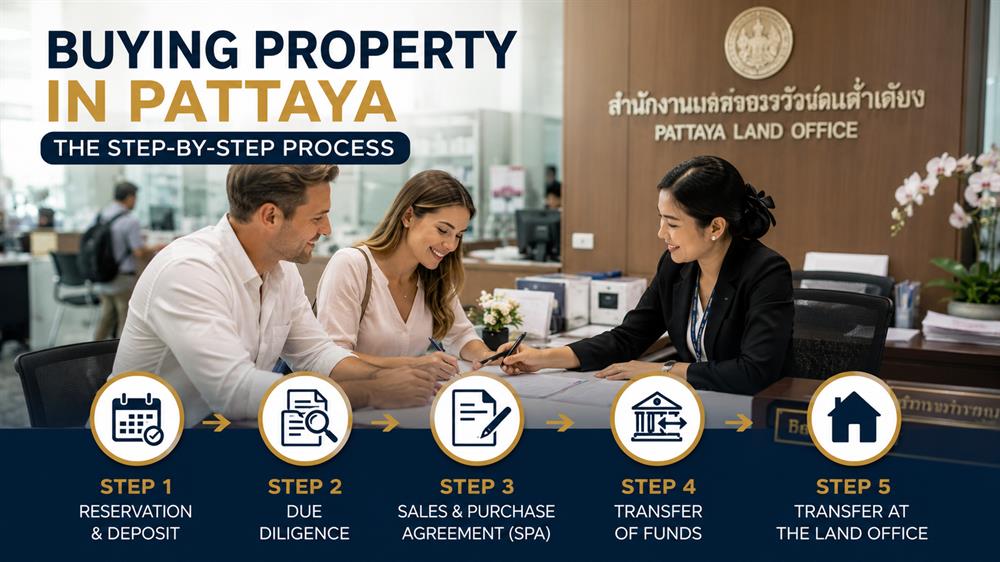
When you are ready to move forward, you will sign a reservation agreement. This takes the property off the market. At this stage, you will pay a deposit, which typically ranges from ฿50,000 to ฿200,000 depending on the property value. Be aware that this deposit is usually non-refundable unless the seller fails the due diligence check.
Step 2: Due Diligence
This is one of the most important stages of the entire purchase process. We always recommend hiring a reputable lawyer to perform due diligence. They will conduct a title search at the Land Office to ensure the seller is the legal owner and check for any existing mortgages or liens. They will also verify that the property complies with zoning laws, has proper building permits, and has legal road access (servitude).
Buyers unfamiliar with the wider process may also find our Thinking About Buying Property in Pattaya guide useful, which explains ownership structures, legal considerations, and practical advice for overseas purchasers.
Step 3: Sales and Purchase Agreement (SPA)
After successful due diligence, you and the seller will sign the Sales and Purchase Agreement (SPA). This contract outlines all the terms of the sale, including the final price, the payment schedule, and the transfer date. It also specifies who is responsible for paying the various taxes and transfer fees.
Step 4: Transfer of Funds
If you are buying a freehold condo, you must prove that the funds came from abroad in a foreign currency. This is a strict requirement by the Land Department. You should transfer the money from your overseas bank account directly to a Thai bank account. If the amount is over $50,000 USD, the Thai bank will issue a Foreign Exchange Transaction (FET) form. You must present this FET form at the Land Office to register the property in your name.
Step 5: Transfer at the Land Office
The final step happens at the Pattaya Land Office. On the agreed transfer date, you (or your lawyer acting via Power of Attorney) will pay the remaining balance to the seller and settle all taxes and fees. The Land Officer will then transfer the ownership, and you will receive the Chanote (title deed) with your name printed on the back.
Costs and taxes involved when you buy a property in Pattaya
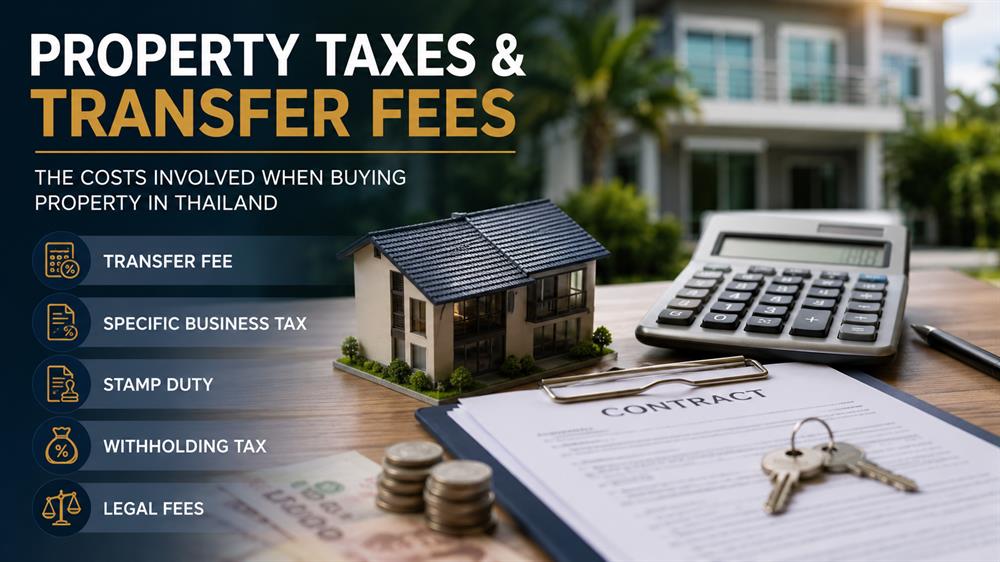
Beyond the purchase price, you need to budget for government fees and taxes. These are paid at the Land Office upon transfer. Buyers looking for a more detailed breakdown can also read our Foreign Buyers Property Taxes in Thailand guide, which explains transfer fees, withholding tax, stamp duty, and other ownership costs in greater detail.
1. Transfer Fee
The Land Department charges a transfer fee of 2% based on the property’s official appraised value.
In Pattaya, it is common for the buyer and seller to split this fee 50/50, but this is not a legal requirement. The final arrangement depends on what is agreed in the Sale and Purchase Agreement (SPA).
2. Specific Business Tax (SBT)
Specific Business Tax is charged at 3.3% of the higher of the appraised value or the selling price.
This tax usually applies if:
- The seller has owned the property for less than 5 years, or
- The property does not qualify as the seller’s primary residence
SBT is normally paid by the seller.
3. Stamp Duty
If Specific Business Tax does not apply, Stamp Duty of 0.5% is charged instead.
Stamp Duty is calculated on the appraised value or sale price (whichever is higher) and is typically paid by the seller.
4. Withholding Tax
Withholding tax is an income tax prepayment collected at the Land Office.
- For individual sellers, the amount depends on the appraised value and how long the property has been owned.
- For company sellers, it is usually 1% of the appraised value or selling price.
This tax is paid by the seller.
5. Legal Fees
As a buyer, you are responsible for your own legal costs.
For a standard condo purchase in Pattaya, legal fees typically range between ฿20,000 and ฿50,000, covering due diligence, contract review, and assistance with the ownership transfer.
Final Thoughts
Buying property in a foreign country does not have to be stressful. With the right guidance, it can become a straightforward and rewarding journey towards owning a beautiful home, securing a long-term investment, or beginning a new chapter in Thailand.
At Cornerstone Real Estate, our multilingual team has helped thousands of buyers navigate the Pattaya property market since 2005. From finding the right property to coordinating legal due diligence and completing the transfer process, we are committed to ensuring every transaction is safe, transparent, and fully compliant.
Whether you are searching for a beachfront condominium in Wongamat, a family home in Huay Yai, or an investment property in Central Pattaya, our local experience and professional guidance can help you move forward with confidence.
Buyers who are still exploring the market can also register for our Property Alert Service to receive new listings that match their requirements as soon as they become available.
If you would like a broader overview of ownership options, legal considerations, and the Pattaya property market, our Thinking About Buying Property in Pattaya guide provides additional advice for international buyers.
CONTACT CORNERSTONE REAL ESTATE


🏆 Award-Winning Pattaya Real Estate Agency – Recognised by Nestopa Thailand.
If you would like personalised guidance on buying, renting, selling, or managing property in Pattaya, contact our team today and discover why so many clients continue to trust Cornerstone Real Estate.
📲 WhatsApp: +66 807 945 904
💬 LINE ID: @cornerstonepattaya
📞 +66 (0)38 411250
📧 info@cornerstone.co.th
🌐 www.cornerstone.co.th
Cornerstone Real Estate — Doing Things The Right Way.